Finger Scanner Prices in Pakistan: 2026 Buyer Guide
If you are budgeting for staff attendance or access control, understanding finger scanner prices in Pakistan is the first step to a smart purchase in 2026. I have specified biometric hardware for offices, clinics, and factory gates across Lahore and Islamabad, and the same question comes up every time: which device gives reliable reads without overpaying? This guide answers that with real feature comparisons, price bands, and practical setup advice.
Biometrics have moved well beyond simple time clocks. Today they anchor payroll accuracy, secure server rooms, and even feed visitor-flow systems. Let us look at what actually drives the price and the performance.
What Drives Finger Scanner Prices in Pakistan
Two devices that look identical can differ sharply in cost, and the reasons are usually hidden inside the sensor and the software. Sensor type, matching speed, storage capacity, and connectivity all move the price. A cheap optical sensor struggles with dry or worn fingerprints, while a capacitive or multispectral sensor reads them cleanly.
Software licensing is the second hidden factor. Some units ship with lifetime desktop software, others charge a recurring cloud fee. Always ask what the total three-year cost looks like, not just the box price.
Cost Factors at a Glance
- Sensor technology, optical versus capacitive versus multispectral.
- User capacity, from 500 templates up to 10,000+.
- Connectivity, USB, TCP/IP, Wi-Fi, or 4G.
- Extras like face recognition, card readers, or battery backup.
- Software model, one-time licence versus subscription.
Price Bands You Can Expect in 2026
Rather than quote a single figure that ages instantly, it helps to think in tiers. The table below groups devices by use case so you can match budget to need. Prices shift with the rupee and import duties, so treat these as planning bands.
| Tier | Typical Use | Key Features | Relative Price |
|---|---|---|---|
| Entry | Small office attendance | Optical sensor, USB, basic software | Lowest |
| Mid-range | Multi-department, TCP/IP | Faster matching, cloud sync, larger memory | Moderate |
| Premium | Access control, high traffic | Multispectral, face + card, anti-spoof | Highest |
For a live, itemised look at current models, this listing of Finger scanner devices prices in pakistan is a useful reference point when comparing specifications side by side.
How Do You Pick the Right Scanner?
Match the sensor to your environment first. Dusty factory floors and workers with rough hands need capacitive or multispectral reads, not budget optical units that reject a fifth of scans. That rejection rate quietly destroys goodwill at the gate every morning.
Next, size the memory for growth. Buying a 500-user device for a 400-person company means replacing it within a year. Headroom is cheaper than a second purchase.
A Field-Tested Tip
Here is an insight most spec sheets miss: enrolment quality decides everything. Spend ten extra seconds capturing three angles of each finger during setup, and your daily false-rejection rate collapses. I have seen the same hardware perform brilliantly at one site and poorly at another purely because of rushed enrolment.
Beyond Attendance: Connected Front Desks
Biometrics rarely live alone in 2026. Clinics and service centres now link staff scanners to visitor systems so the same network handles both employee check-in and patient flow. That integration is where the biggest efficiency gains appear.
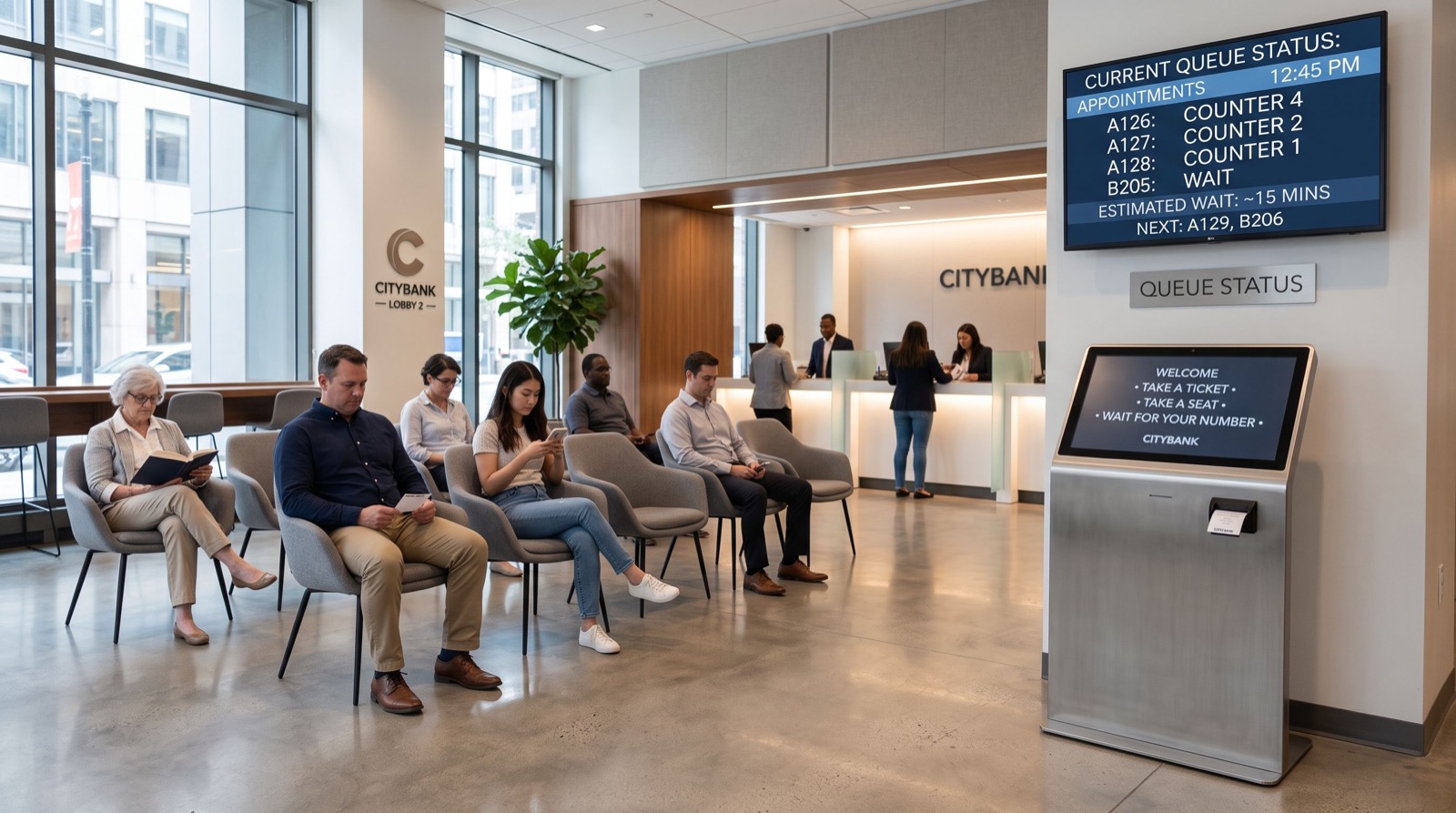
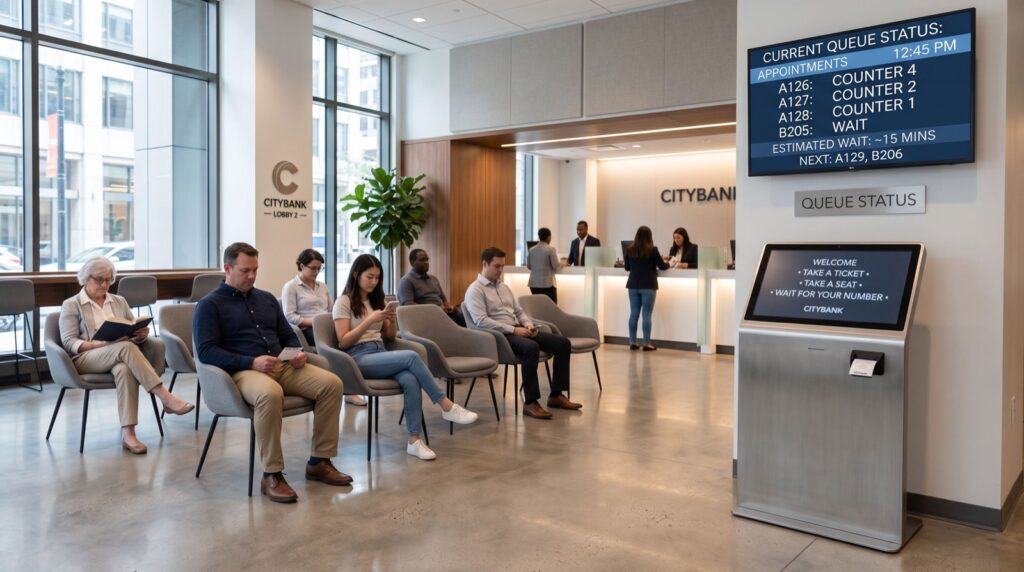
For example, a clinic can pair fingerprint attendance with a queue management system in saudi arabia deployment to keep front-desk staffing matched to real-time patient volume. When both systems share data, managers finally see cause and effect instead of guessing.
Integration Checklist
- Confirm an open API or SDK for third-party links.
- Verify TCP/IP or cloud connectivity, not USB-only.
- Check exportable logs in CSV or database format.
- Ensure the vendor supports on-site commissioning.
Optical, Capacitive, or Multispectral?
The sensor is the heart of any fingerprint device, and understanding the three main types saves you from an expensive mismatch. Optical sensors photograph the ridge pattern and cost the least, but they struggle with dry, wet, or worn fingers. Capacitive sensors read the electrical difference between ridges and valleys, giving cleaner results on tricky hands.
Multispectral sensors sit at the top. They read below the skin surface, so dust, moisture, and light wear barely affect them. In a factory or outdoor gate, that resilience is worth the premium many times over.
Quick Sensor Comparison
- Optical, budget-friendly, best for clean office environments.
- Capacitive, mid-range accuracy, good for mixed conditions.
- Multispectral, premium, ideal for harsh or high-security sites.
Match the sensor to the roughest hands and worst conditions on your site, not the average. That single rule prevents most buyer regret.
Total Cost of Ownership Over Three Years
A low sticker price can hide a high running cost. When I model purchases for clients, I add software fees, expected support calls, and the cost of scan failures that slow the morning gate. A device that rejects one in five scans wastes staff minutes every single day, and that lost time dwarfs the price gap between tiers.
Firmware support is the other quiet cost. A vendor who abandons updates leaves you exposed to spoofing tricks and compatibility breaks within a couple of years. Paying slightly more for a supported line is cheaper than an emergency replacement in 2027.
Budgeting Steps I Recommend
- List the box price for each shortlisted device.
- Add three years of software or cloud fees.
- Estimate daily scan-failure minutes and cost them out.
- Factor in support response time and firmware policy.
- Compare the true three-year totals, not the sticker prices.
Security and Data Standards
Fingerprint data deserves protection. Look for devices that store templates as encrypted mathematical models, not raw images. The widely referenced NIST biometrics research programme publishes evaluation data on sensor accuracy and anti-spoofing that is worth reviewing before you commit to a vendor.
Ask suppliers how they handle template encryption and firmware updates. Trustworthy reliable local experts will document both clearly rather than dodge the question.
Frequently Asked Questions
What affects finger scanner prices in Pakistan the most?
Sensor type and software licensing move the price more than anything else. A multispectral sensor with lifetime software costs more upfront but reads difficult fingerprints reliably and avoids recurring fees.
Do cheap scanners work for factory workers?
Often poorly. Manual labour wears down fingerprint ridges, so budget optical sensors reject many scans. Capacitive or multispectral units are worth the extra cost in industrial settings.
Can a fingerprint device connect to attendance software?
Yes. Mid-range and premium units offer TCP/IP or cloud connectivity and export logs to payroll or HR software. Confirm the API before buying if you plan integrations.
Is fingerprint data safe to store?
When the device stores encrypted templates rather than raw images, the data is difficult to reverse-engineer. Always choose hardware that encrypts templates and receives regular firmware updates.
Conclusion
Getting finger scanner prices in Pakistan right in 2026 means looking past the box price to sensor quality, memory headroom, and total software cost. Match the device to your environment, invest time in clean enrolment, and plan for integration with your front-desk systems. Ready to buy? Request a spec-by-spec comparison from a trusted supplier before you decide.