
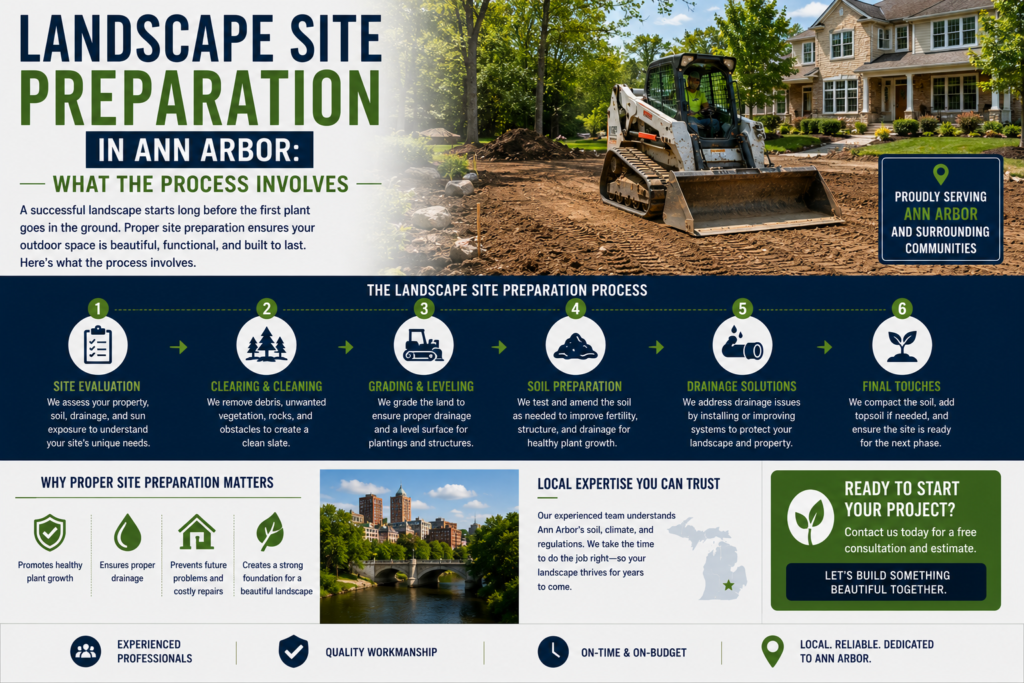
Landscape Site Preparation Ann Arbor is the foundational stage of any outdoor improvement or construction project. It encompasses all the work done to clear, grade, and ready a piece of land before landscaping features, structures, or plantings are installed. Done correctly, site preparation creates the stable, functional base that every successful landscape design depends on.
In Ann Arbor, Michigan, where properties range from wooded lots to open suburban yards, site preparation is a nuanced process that accounts for native soils, seasonal weather patterns, and the specific requirements of the planned landscape. Whether a property owner is installing a new lawn, building a patio, planting a garden, or preparing land for residential construction, proper site preparation is an essential first step.
Key Steps in the Site Preparation Process
Landscape site preparation typically begins with a site evaluation. Contractors assess the current condition of the land, including its topography, soil composition, existing vegetation, drainage patterns, and the presence of any underground utilities. This assessment informs every subsequent phase of the preparation work.
Land clearing follows the evaluation. This involves removing trees, shrubs, brush, rocks, roots, and any existing structures or debris that would interfere with the planned landscape. In wooded areas, tree removal may require stump grinding and root extraction to prevent future regrowth and to eliminate tripping hazards.
After clearing, the land is graded and shaped. Grading ensures that the ground slopes appropriately to direct water away from structures and prevent pooling. Depending on the scale of the project, this phase may involve adding or removing large quantities of soil to achieve the desired elevations and contours.
Soil preparation is the next critical stage. In Ann Arbor, native soils can be compacted, clay-heavy, or otherwise unsuitable for supporting healthy plant growth or stable construction. Amending the soil by adding topsoil, compost, or other organic material improves drainage, fertility, and structure. Once the soil is prepared, it is compacted or loosened depending on its intended use: firm compaction is needed beneath hardscapes, while looser, aerated soil is better for lawn and garden areas.
Finally, drainage systems may be installed during site preparation. French drains, swales, and catch basins help manage stormwater and prevent erosion, protecting both the landscaped areas and any nearby structures.
Why Site Preparation Matters for Long-Term Results
Skipping or rushing through site preparation is one of the most common causes of landscape failure. Lawns that are installed on poorly graded or uncompacted soil develop drainage problems, bare patches, and uneven surfaces. Patios and pathways built without proper base preparation are prone to shifting, cracking, and heaving especially during the freeze-thaw cycles that are common in Ann Arbor’s winters.
Proper site preparation also significantly reduces the ongoing maintenance burden of a landscape. A yard that is correctly graded and well-drained requires far less attention to standing water issues, erosion repair, and replanting of areas where poor drainage has killed grass or plants. Investing in thorough preparation upfront leads to a landscape that is both healthier and more durable over the long term.
Site Preparation for Different Types of Projects
The specific requirements of landscape site preparation vary by project type. New lawn installation requires careful grading, soil testing, topsoil application, and often the installation of an irrigation system. Hardscape projects like patios, driveways, and walkways require excavation to remove topsoil and the installation of compacted gravel base layers before the surface material is applied.
Garden bed preparation involves loosening and amending soil to create an environment where plants can establish healthy root systems. Tree and shrub planting areas may require special attention to drainage and soil depth. For larger construction projects, such as building a new home or adding a significant structure, site preparation may include extensive grading, utility installation, and erosion control measures.
In Ann Arbor, where municipal regulations govern stormwater management and erosion control, working with a professional contractor ensures that all site preparation work meets local codes and environmental standards.